

214 Waller Ave
Greenwood, SC 29646

Advanced Cataract Consultations in Newberry: Premium Lenses vs. Standard Lens Options

Cataracts can gradually affect your ability to read, drive, and enjoy everyday activities. When cataract surgery becomes necessary, choosing the right replacement lens is an important part of the process. At Johansen Precision Eye Care in Newberry, SC, we help patients understand their cataract diagnosis, evaluate their vision needs, and prepare for informed discussions about surgical treatment options.
Understanding the differences between premium lenses and standard lens options can help you determine which approach best fits your lifestyle and visual goals.
Understanding Cataract Surgery and Lens Replacement
Cataracts develop when the eye's natural lens becomes cloudy, causing blurry vision, glare, and difficulty seeing in low-light conditions. During cataract surgery, an ophthalmologist removes the cloudy lens and replaces it with an artificial intraocular lens (IOL).
The type of IOL selected influences how clearly you may see at different distances after surgery. During a cataract consultation in Newberry, we evaluate your eye health and discuss factors that may affect your treatment options.
Standard Lens Options for Cataract Surgery
Standard monofocal lenses are commonly used during cataract surgery. These lenses provide clear vision at one primary distance, typically far away.
Patients who choose standard lenses may still need glasses for reading, computer work, or other activities requiring different focusing distances.
Standard monofocal lenses are generally covered by Medicare and many insurance plans when cataract surgery is medically necessary, although deductibles and other expenses may apply.
For patients comfortable wearing glasses after surgery, standard lenses can provide excellent visual outcomes.
Premium Lens Options: What Makes Them Different?
Premium intraocular lenses offer additional features designed to address specific vision needs. Depending on your eye health, prescription, and lifestyle, your cataract surgeon may recommend options such as:
Multifocal lenses: Designed to provide vision at multiple distances, potentially reducing dependence on glasses.
Extended depth of focus (EDOF) lenses: Provide an extended range of vision, particularly useful for distance and intermediate activities.
Toric lenses: Correct certain levels of corneal astigmatism to improve visual clarity after surgery.
Enhanced monofocal lenses: Offer an extended range of usable vision compared to traditional monofocal lenses, although reading glasses may still be necessary.
Premium lenses are not appropriate for everyone. Some designs can cause halos, glare, or reduced contrast sensitivity, particularly in low-light conditions. Premium lens features also typically involve additional out-of-pocket expenses.
What Happens During an Advanced Cataract Consultation?
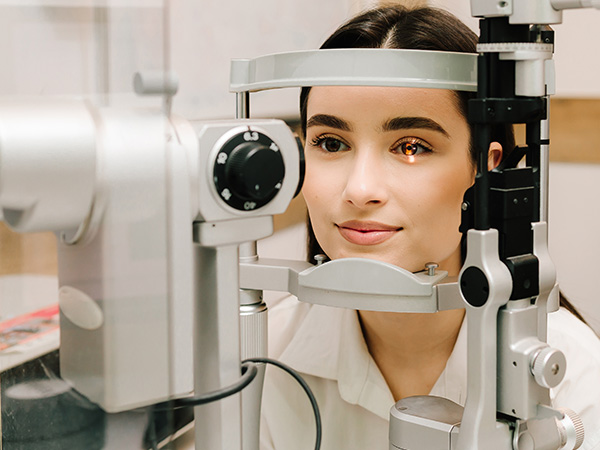
At Johansen Precision Eye Care, we take a personalized approach to evaluating cataracts and discussing your vision concerns.
Dr. Samuel Johansen assesses your visual acuity, eye health, cataract development, and any underlying conditions that could influence surgical outcomes.
We also discuss your daily activities, including reading, driving, computer use, and your preferences regarding glasses.
If cataract surgery is appropriate, we can help you understand the next steps and questions to discuss with your cataract surgeon, who will determine surgical eligibility and final lens selection.
Choosing Between Premium and Standard Cataract Lenses
The right cataract lens depends on more than your prescription. Conditions such as glaucoma, macular degeneration, and irregularities affecting the cornea may influence which lenses are suitable.
During your cataract evaluation in Newberry, we focus on identifying your individual needs rather than assuming premium lenses are automatically the better choice.
Our goal is to help you make informed decisions about your vision and understand the benefits and limitations of available lens technologies.
Schedule your cataract consultation with Johansen Precision Eye Care in Newberry, SC, by calling (803) 276-6959. Our team is here to help you explore your vision needs and prepare for the next steps in cataract care.
© 2026 Johansen Precision Eye Care. All rights Reserved - Accessibility Statement - Privacy Policy - SMS Terms of Service - Sitemap
Powered by
